
XXXXL Shirts Pakistan 2026 – Fitting, Sizes & Where to Buy
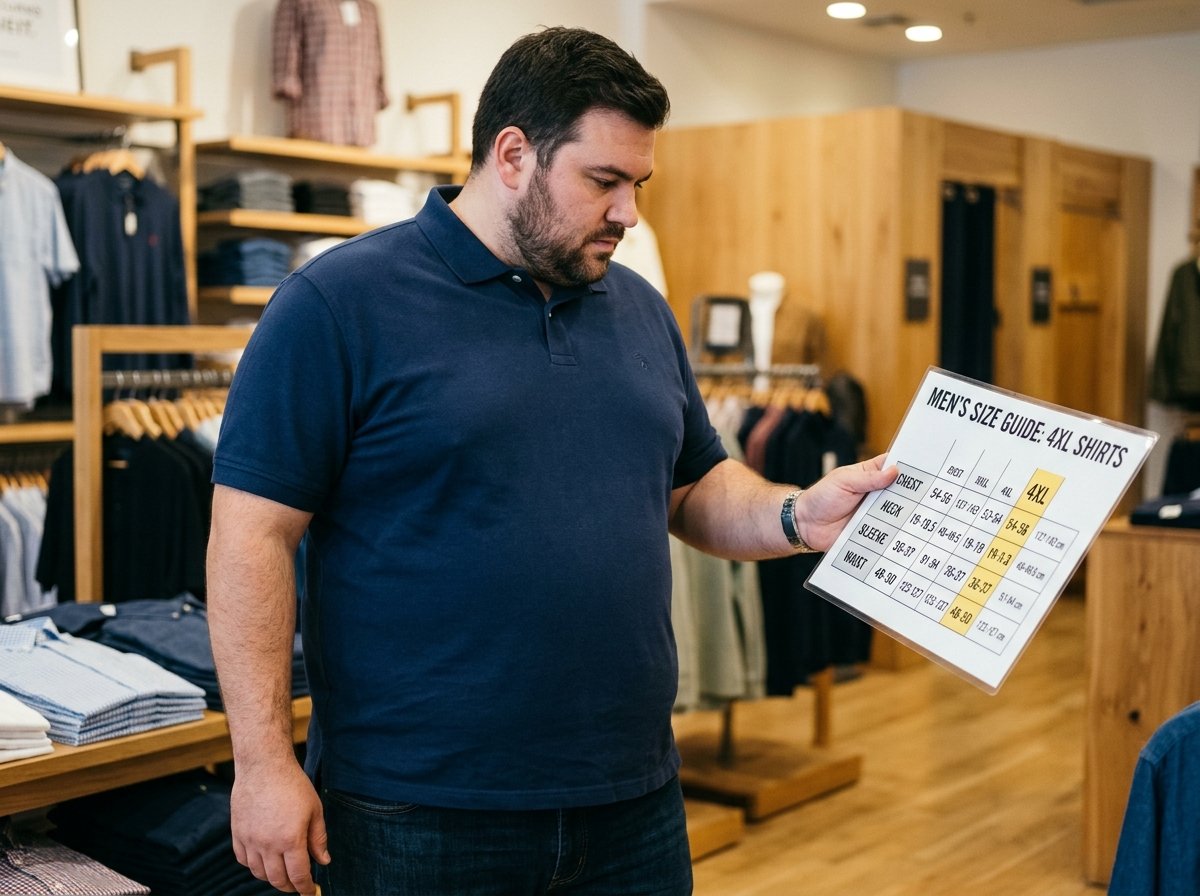
Almost 40% of Pakistani men who wear sizes beyond XL say they’ve received at least one online order that didn’t fit — and ended up wasting both money and time on returns. If you’ve ever stood in a shop and heard “Bhai, is se badi size nahi hai,” you already know the frustration.
Finding XXXXL shirts in Pakistan isn’t just about picking a bigger number on a tag. It’s about understanding how Pakistani brands measure their sizes, what fabric actually works for larger frames, and where to shop without playing a guessing game. This guide gives you an honest, practical breakdown — real size charts, smart buying tips, and answers to the questions you’ve probably been Googling at 2 AM.
Why Finding XXXXL Shirts in Pakistan Is Still a Challenge
Let’s be honest about something. Pakistan’s garment industry has grown massively in the last decade. Brands like Gul Ahmed, Junaid Jamshed, Bonanza, and dozens of online stores now sell everything from casual tees to formal shalwar kameez. But the plus-size segment? It’s still catching up.
Most mainstream brands stock sizes from S to XXL. Some stretch to 3XL. But XXXXL — or 4XL — is where the options start to thin out dramatically. Walk into a physical store at a mall in Lahore, Karachi, or Islamabad and ask for a 4XL shirt. You’ll likely get a polite “Abhi available nahi hai” or, worse, a regular XXL that someone insists will “stretch ho jayegi.”
The good news? Online shopping has changed this. Dedicated plus-size stores and specialized sellers now cater specifically to people who need sizes beyond the usual range. The key is knowing where to look and, more importantly, knowing your actual measurements — because a “4XL” from one brand can feel like a 2XL from another.
Quick Fact: According to Pakistan Bureau of Statistics data trends, the average body mass of Pakistani adults has been steadily increasing over the past 15 years. The demand for larger clothing sizes isn’t niche anymore — it’s a growing market that brands are slowly recognizing.
Understanding the XXXXL Size – What Do the Numbers Actually Mean?
Here’s where most people get confused. You see “XXXXL” or “4XL” on a label, but what does that translate to in inches or centimeters? And why does a 4XL shirt from a Pakistani brand fit differently than one from an international brand?
The short answer: there’s no universal standard. Every brand, whether local or international, uses its own size chart. A 4XL from a Karachi-based online store might have a 56-inch chest, while a 4XL from an international brand could go up to 60 inches. This is exactly why you should never buy based on the label alone.

Pakistani vs. International Sizing — The Key Difference
Pakistani clothing brands generally run slightly smaller than their Western counterparts. If you comfortably wear an XXL from an American brand like Levi’s or H&M, you might actually need a 3XL or even 4XL from a Pakistani brand. This isn’t a quality issue — it’s simply a different sizing baseline.
International sizing typically uses American or European standards, where body measurements tend to be larger on average. Pakistani brands design for the local population’s average body frame, so their size ranges naturally start smaller.
Pro Tip: Whenever you’re buying from a new brand for the first time — local or international — always check their specific size chart. Don’t assume your usual size will work. Take 5 minutes to measure yourself. It’ll save you days of return hassle.
XXXXL Shirt Size Chart for Pakistani Men (2026 Updated)
This is the section you probably scrolled down for. I’ve put together a practical size chart based on measurements commonly used by popular Pakistani plus-size clothing sellers in 2026, including brands and stores like 4XL Shirts Pakistan that specialize in larger sizes.
Standard XXXXL (4XL) Measurements — Men’s Shirts (Western/Casual)
| Measurement | Inches | Centimeters |
|---|---|---|
| Chest | 54–58 | 137–147 |
| Shoulder | 21–23 | 53–58 |
| Shirt Length | 31–34 | 79–86 |
| Sleeve Length | 26–28 | 66–71 |
| Neck | 19–20.5 | 48–52 |
| Waist (relaxed) | 50–56 | 127–142 |
For Shalwar Kameez (XXXXL / 4XL)
| Measurement | Inches | Centimeters |
|---|---|---|
| Chest | 54–58 | 137–147 |
| Kameez Length | 40–44 | 102–112 |
| Shoulder | 21–23 | 53–58 |
| Sleeve (full) | 25–27 | 64–69 |
| Shalwar Waist | 42–50 | 107–127 |
Keep in mind, these are general ranges. Your ideal fit depends on whether you prefer a relaxed fit, a regular fit, or a slightly snug style.
How to Measure Yourself at Home (It Takes 3 Minutes)
You don’t need a tailor. Just grab a soft measuring tape — the kind used for sewing, not the metal one from your toolbox. If you don’t have one, use a string and then measure the string against a ruler.
Chest: Wrap the tape around the fullest part of your chest, right under your arms. Keep it snug but not tight. You should be able to fit one finger underneath comfortably.
Shoulder: Measure from the edge of one shoulder bone to the other, going across the back of your neck. This is tricky to do alone — if someone’s around, ask for help.
Shirt/Kameez Length: Start from the highest point of your shoulder (where a seam would sit) and measure straight down to wherever you want the shirt to end — mid-hip for casual shirts, below the knee for traditional kameez.
Sleeve Length: From your shoulder edge, measure along the outside of your arm down to your wrist bone. Keep your arm slightly bent, not ramrod straight — that’s a more natural position.
Neck: Wrap the tape around the base of your neck where a collar would sit. Add half an inch for comfort. Nobody wants a collar that chokes them.
⚠️ Warning: Don’t measure over thick clothing. Wear a single layer — a regular undershirt or t-shirt is fine. Measuring over a sweater or jacket will add 2–3 inches and throw off your size completely.
Fabric Guide — What Works Best for XXXXL Shirts?
Fabric choice matters for everyone, but it matters more when you’re buying a larger size. The wrong fabric can make you feel uncomfortable, overheat quickly, or lose shape after just two washes. Here’s what to look for and what to avoid.
Best Fabrics for Plus-Size Shirts in Pakistan
Cotton (Pure or Combed): This is your safest bet, especially in Pakistan’s climate. Cotton breathes well, absorbs sweat, and feels soft against skin. For XXXXL shirts, look for cotton with a slightly heavier GSM (grams per square meter) — around 180–200 GSM. Lightweight cotton tends to cling to the body, and that’s not flattering or comfortable for larger frames.
Cotton-Polyester Blend (60/40 or 70/30): A blend gives you the comfort of cotton with better shape retention from polyester. Your shirt keeps its structure throughout the day instead of stretching out by evening. Good blends also resist wrinkles, which is a nice bonus.
Lawn (for Shalwar Kameez): During Pakistani summers — especially in Lahore, Multan, or Hyderabad where temperatures cross 45°C — lawn fabric is a lifesaver. It’s ultra-light and breathable. For XXXXL kameez, make sure the lawn isn’t too thin (semi-transparent lawn on a larger body doesn’t work well). Go for premium quality lawn from trusted brands.
Linen: An underrated option. Linen is extremely breathable and gets softer with every wash. The downside? It wrinkles easily. But if you don’t mind a slightly “lived-in” look, linen XXXXL shirts feel incredibly comfortable.
Fabrics You Should Think Twice About
Pure polyester shirts trap heat. In a country where six months of the year involve serious heat, wearing a polyester shirt all day is just punishing yourself. It also tends to develop an unpleasant smell faster because it doesn’t absorb moisture — it just sits on the surface.
Very thin fabrics — regardless of the material — are generally a poor choice for XXXXL sizes. They highlight every contour and don’t drape well on larger bodies. Slightly thicker, structured fabrics always look and feel better.
Where to Buy XXXXL Shirts in Pakistan (Online & Offline)
This is probably your next big question: “Theek hai, size samajh aa gayi, fabric bhi — but kahan se khareedein?”
Online Stores (Best Option for 4XL+)
Online shopping is genuinely the best route for plus-size clothing in Pakistan right now. The variety is better, you can compare sizes easily, and most stores now offer exchanges if the fit isn’t right.
Specialized stores like 4XL Shirts focus specifically on plus-size men’s clothing, which means their size charts are more accurate for larger sizes, their fabric choices are tested for bigger body types, and their designs actually account for proportions (a 4XL shirt shouldn’t just be a blown-up version of a Medium — the proportions need to change).
Other platforms like Daraz, Kaymu’s successor platforms, and various Instagram-based sellers also carry XXXXL options, but your experience will vary. Always check reviews, ask for exact measurements (not just the size label), and confirm the return policy before placing an order.
Pro Tip: Before buying from any new online store, message them directly and ask for the exact chest, length, and shoulder measurements of the specific shirt you want. Good sellers will reply with precise numbers. If someone just says “It’s 4XL, it’ll fit,” that’s a red flag.
Offline Options
For physical shopping, your best bets are:
Tariq Road and Hyderi Market (Karachi) — Some shops carry plus-size ready-made options, though you’ll need to hunt a bit. The custom tailoring shops here can stitch a great XXXXL outfit if you bring good fabric.
Liberty Market and Anarkali (Lahore) — Similar situation. Ready-made options in 4XL are limited, but tailors here are experienced and affordable. Getting a custom-stitched shirt in Lahore will run you between PKR 1,500–4,000 for stitching alone (fabric extra), depending on the style and tailor’s reputation.
Islamabad’s Jinnah Super and F-10 Markaz — A few boutiques carry extended sizes. Prices are generally higher than Lahore or Karachi, but the shopping experience is more organized.
Custom Tailoring — Honestly? If you’re in Pakistan, getting a shirt custom-stitched by a good tailor is still one of the best options for XXXXL sizes. You choose the fabric, give your exact measurements, and get a shirt that fits your body — not some generic pattern. The cost is often comparable to or even less than buying a branded ready-made shirt.
How to Judge Whether an XXXXL Shirt Actually Fits Well
Buying the right size is only half the battle. Knowing whether the shirt actually fits well on your body is the other half. Here’s how to evaluate the fit once you’ve got the shirt on.
Shoulder seams should sit right at the edge of your shoulder bone — not drooping down your arm and not pulling tight across your upper back. If the seam hangs below your shoulder point, the shirt is too big. If it’s pulling, it’s too small.
Chest area should allow you to button up comfortably without the fabric pulling apart between buttons. If you see those little horizontal stress lines (they look like tiny fish mouths between the buttons), the chest is too tight — go up a size.
Length depends on how you’ll wear the shirt. For casual wear with jeans, the shirt should end around mid-fly of your pants. For formal tucking, it should be long enough to stay tucked when you raise your arms.
Sleeves for full-sleeve shirts should reach your wrist bone. Not your knuckles, not mid-forearm. Right at the wrist bone. For half-sleeves, they should end around mid-bicep — not tight enough to cut into your arm but not so loose they look like wings.
Did You Know? A well-fitted XXXXL shirt can actually make you look slimmer than a baggy oversized one. When clothes are too big, they add visual bulk. A shirt that follows your body’s natural lines without being tight creates a much cleaner silhouette. This is one of the most common styling mistakes larger men make — buying even bigger to “hide” their size, when it actually does the opposite.
Price Range for XXXXL Shirts in Pakistan (2026 Estimates)
Let’s talk money. Prices vary a lot depending on the brand, fabric, and whether it’s a basic tee or a formal dress shirt. Here’s a realistic breakdown for 2026.
Casual T-Shirts (4XL): PKR 1,200–3,500. Basic cotton tees from local brands sit at the lower end. Branded or premium cotton tees with better stitching and finishing will be towards the higher end.
Polo Shirts (4XL): PKR 2,000–5,000. Polo shirts in plus sizes are harder to find, which sometimes bumps the price up. Look for cotton pique fabric — it holds its shape better than regular jersey cotton.
Formal/Dress Shirts (4XL): PKR 2,500–7,000. A well-made formal shirt in XXXXL with proper collar stiffening, quality buttons, and good fabric will cost you in this range. Don’t go below PKR 2,000 for a formal shirt — the quality drop is noticeable.
Shalwar Kameez (Ready-Made, 4XL): PKR 3,000–8,000. This includes stitched sets. Unstitched fabric with custom tailoring might cost slightly less but gives you better fit control.
Pro Tip: Don’t fall for prices that seem too good to be true. If someone is selling a “premium cotton” XXXXL shirt for PKR 600, the fabric quality will almost certainly be poor — thin, rough after washing, and prone to shrinkage. A good shirt is an investment. Spending an extra PKR 500–1,000 upfront saves you from buying a replacement in two months.
Caring for Your XXXXL Shirts — Making Them Last
You’ve found the right size, the right fabric, and spent decent money. Now don’t ruin the shirt by washing it wrong. Larger shirts need slightly different care because of the extra fabric involved.
Wash in cold or lukewarm water. Hot water causes cotton to shrink — and even a 1-inch shrinkage on a well-fitted 4XL shirt can make it uncomfortably tight. If the shirt label says “machine wash,” use a gentle cycle. If you can hand wash, even better.
Dry in shade, not direct sunlight. Pakistani summers can be brutal, and direct sun fades colors fast. Hang the shirt on a wide hanger — not a thin wire one. Thin hangers create shoulder bumps on heavier shirts that are tough to iron out later.
Ironing on medium heat works for most cotton and blend fabrics. If you’re using a steam iron, even better — steam relaxes the fibers and gives a smoother finish without pressing too hard.
Store shirts folded or on proper hangers. Don’t cram a 4XL shirt into a crowded closet — the creases become permanent over time.
Common Mistakes to Avoid When Buying Plus-Size Shirts
After talking to dozens of plus-size buyers and going through countless online reviews, some patterns are clear. These are the mistakes people keep repeating.
Buying based on the size tag alone. We’ve covered this, but it’s worth repeating because it’s the number one cause of returns and disappointment. A “4XL” is meaningless without checking actual measurements. Two different brands’ 4XL shirts can differ by 4–5 inches in the chest. Always measure, always compare with the size chart.
Ignoring the shoulder measurement. Most people check chest size and length but forget the shoulders. If the shoulder fit is off, the entire shirt looks wrong — no matter how good everything else is. Shoulders are the anchor point of a shirt’s fit.
Choosing very dark colors only. There’s an old belief that plus-size people should only wear black, navy, and dark grey to “look thinner.” That’s outdated thinking. Yes, darker shades are slimming, but wearing nothing but dark colors gets boring fast. Medium tones like steel blue, olive green, maroon, and even certain pastels can look fantastic on larger frames. The key is fit, not color.
Skipping the return policy check. Always — always — confirm whether the seller accepts returns or exchanges for sizing issues. Reputable stores like 4XL Shirts Pakistan typically have clear exchange policies. Random social media sellers? Not always. Ask before you pay.
FAQ Section
Q: Is XXXXL the same as 4XL in Pakistan?
Yes, XXXXL and 4XL refer to the same size. Some brands write it as “XXXXL,” others use “4XL” — it’s just a labeling preference. The actual measurements should be the same within a brand. Always check the brand’s specific size chart regardless of how they label it, because measurements between brands can still vary by several inches.
Q: What chest size does a 4XL shirt usually fit in Pakistan?
Most Pakistani brands design their 4XL shirts for a chest measurement between 54 and 58 inches. Some brands go slightly lower (52 inches) or higher (up to 60 inches). Before ordering, confirm the exact chest measurement from the seller. If your chest measures 56 inches, look for a shirt with a chest measurement of 57–59 inches for a comfortable, non-tight fit.
Q: Can I find branded XXXXL shirts in Pakistan, or do I have to go custom?
Both options exist. Specialized online stores now stock ready-made branded shirts in XXXXL. You can browse options at stores like 4XL Shirts that carry plus-size inventory specifically designed for larger body types. That said, custom tailoring remains an excellent option in Pakistan — it’s affordable, widely available, and gives you a perfect fit since the shirt is made to your exact measurements.
Q: Do XXXXL shirts shrink after washing?
They can, especially if the fabric is pure cotton and you wash in hot water. Expect 1–3% shrinkage with cotton. To minimize this, wash in cold water and air-dry in shade. Cotton-polyester blends shrink less. If you’re worried about shrinkage, buy a shirt that fits comfortably (not skin-tight) so minor shrinkage doesn’t make it unwearable.
Q: Are XXXXL shirts more expensive than regular sizes?
Slightly, yes. More fabric is used, and the cutting patterns are different. On average, expect to pay 15–25% more than the same shirt in size L or XL. This isn’t unreasonable — it reflects actual material and production costs. Be wary of stores that charge double the regular price for a plus-size shirt; that’s just inflated pricing taking advantage of limited options.
Your Next Step
Finding XXXXL shirts in Pakistan used to feel like a treasure hunt with no map. That’s changing fast. More brands are expanding their size ranges, online stores dedicated to plus sizes are growing, and awareness about proper fitting is spreading.
The single most important thing you can do right now? Grab that measuring tape and write down your chest, shoulder, length, and sleeve measurements. Keep those numbers saved on your phone. Every time you shop — online or offline — compare your measurements with the size chart. That one habit will eliminate 90% of the fitting problems you’ve dealt with before.
Your body deserves clothes that fit well and feel comfortable. Don’t settle for “close enough.” The right XXXXL shirt is out there, and now you know exactly how to find it.